Yulia's Story
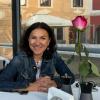
Description
Before coming to Wales, I had a stable and comfortable life in Ukraine. I loved my career, I loved to travel, and I felt a strong sense of achievement. My life in Kyiv, the capital of Ukraine, was fulfilling. I had started my career young, after not initially gaining admission to university. My parents encouraged me to enter the workforce early, and I thrived in the office environment. It wasn’t what I had originally planned, but it worked out well for me.
Then, everything changed on February 22nd, 2022.
"I had everything I needed. I travelled a lot, I enjoyed my life, but all of this suddenly came to a halt," I remember. The war had begun. At the time, I was traveling in Europe with my partner’s daughter for her medical treatment. Suddenly, returning home wasn’t an option. Flights back to Kyiv were cancelled, and we were left stranded, uncertain of what the future would hold.
With no way back, we headed to Poland. I spent a month there, waiting, worrying, and trying to figure out our next steps. I spent my days filling out forms, applying for sponsorship in the UK, and hoping for a path forward. Eventually, we were sponsored by a colleague of my partner, which led us to Wales—a place I had never imagined calling home.
Arriving in Cymru was a relief. From the beginning, I felt the warmth and support of the people here. “Everything was new, but the people were kind,” I quickly realised. I found comfort in unexpected places—like the local pubs, where I could relax and connect with others. The language was a challenge at first. My English was, in my own words, “functional,” but understanding the Welsh accent—especially in the valleys—took some getting used to! “At first, it was difficult, but after a few pints in the local pub, it became easier,” I joke now.
Of course, not everything was easy. My experience with the Job Centre was frustrating. Despite my skills and ability to speak English, I wasn’t given the right support to find work. Instead, I was simply told to attend a job fair. It felt like I was just another number in the system. "The only organisation that really helped me was the Welsh Refugee Council," I explain. "I started volunteering with them, and after a while, I applied for an admin officer role. I’ve been with them for two years now." That experience showed me that rebuilding a life in a new country is possible—but it requires effort.
"It’s not rocket science," I tell people. "If you want to support yourself and your family, it is possible. Yes, it’s hard work, but that’s how life is." I also believe that benefits are meant to be a temporary safety net, not a permanent solution. “People can get out of benefits if they want to, but they have to put in the effort.”
When asked how Welsh people should approach migrants, refugees, and sanctuary seekers, I always emphasise the importance of empathy. "Most people in Wales are already doing a great job supporting us. They help beyond their means," I say. "It’s not always easy, but they do it." I truly believe that the stories we share can change minds and help those who may be hesitant about supporting refugees see the human side of migration.
I also want people to see the economic contributions that refugees can bring. "Once refugees become a part of society, they can become an excellent workforce," I explain. Many of us have transferable skills—from banking to accounting—that can benefit the economy. "Yes, language can be a barrier, but it’s not insurmountable."
One of the most touching moments of my journey happened recently at the Senedd during an event commemorating the Holodomor in Ukraine. A member of the Welsh Parliament shared his story about helping refugees, and I was moved by his dedication. "He had already helped 50 people, and he was so committed to offering them a better life," I recall. Moments like these remind me of the kindness and generosity that exist here.
But I also know that the media often paints a negative picture of migrants, focusing on stories of people arriving on boats as if they are here to take advantage of the system. "They’re coming because they can’t survive in their home countries," I say. "It’s not about taking—it’s about survival." I think of a village back home where the community pooled their money to send someone to the UK, not to exploit the system, but to build a future and one day give back.
My experience in Wales has been overwhelmingly positive. I truly believe that with the right support, Wales can continue to be a welcoming place for those seeking sanctuary. "It’s a small place, but it’s full of lovely people who are willing to help. We’re doing a great job, and we should keep doing it," I say with pride.
Looking back on my journey, I know that it hasn’t been easy. But it has been possible. My story, like so many others, is one of resilience and hope. And as I continue to build my life here, I know that the warmth and kindness of the Welsh people will always be a part of my journey.

More items with these tags
This item also appears in

Contact Us
To request take down or report racist, offensive or otherwise harmful content.
You must be logged in to leave a comment