Francis Lewis 1713-1803
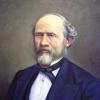
Description
Francis Lewis was born in the month of March 1713, at Landaff in Glamorgan, South Wales, where his father was established as a Protestant Episcopal clergyman. His mother was the daughter of the Rev. Dr. Pettingall, a clergyman of the same profession, in Caernarvonshire, North Wales. He was their only child; but death soon deprived him of his natural guardians and left him an orphan at the age of four or five years.
At this tender stage of life, he was consigned to the care of a maternal maiden aunt, named Llewellin, who resided in Caernarvon. A strong and proud attachment to her country was a peculiar feature in the character of this to respectable lady, who appears to have been devoted everything connected with the ancient British: hence she took particular pains to render her nephew, in early youth, master of the Cymraeg, or native language of his country; a knowledge of which he retained through the course of his life: he was also sent to Scotland, where he acquired, in the family of a Highland relation, the Gaelic language, which is said to be the oldest and purest dialect of the Celtic.
When young Lewis had arrived at the proper age, he was transferred to the tutelage of a maternal uncle, then Dean of St. Paul's in London, by whom he was placed at Westminster School, where he completed his education and became a good classic scholar. He then entered the counting-room of a merchant in the city of London, where he served a regular clerkship, and acquired a very extensive and judicious knowledge of commerce, which became the occupation of he of his future life. When he attained the age of twenty-one years, came into possession of a moderate amount of property, which converted into merchandize, and embarked with it for the city New York, where he arrived in the spring of 1735. Finding that his cargo was too extensive for the New York market, he formed a commercial connexion with Mr. Edward Annesley, a descendant of the ancient Anglesey family, and repaired, with a portion of his merchandise, to Philadelphia, leaving his partner to dispose of the residue in New York.
His knowledge of Welsh saved him from death, for he became friendly with two warriors who strangely resembled their own, a link with the Welsh-sounding speech of some of the Canadian Indians, whose relationship with covered of America. is still being investigated. Instead, Lewis was transported as a prisoner to France but returned to America just when revolution was brewing.
During the French war, Mr. Lewis attended the English troops as agent for supplying them with clothing. Being a friend of the commandant of Fort Oswego, he remained with him in the capacity of aid on the investment of the fort and became a prisoner to the French. After the surrender of Fort Oswego, in 1756, it is reported that Montcalm barbarously gave permission to the chief warrior of the savages, who composed a part of his forces, to select about thirty of the garrison as his portion of the prisoners. Mr. Lewis was included among the number, and it is handed down by an idle tradition that, in this fearful extremity, his life was preserved by a certain resemblance which existed between the Welsh and the Indian tongues.
From the termination of the Canadian war to the commencement of the revolution, Mr. Lewis uniformly co-operated with those early patriots who opposed the gradual encroachments of the British government on the rights of the American people. He was one of the first to enrol his name among the "sons of liberty," an association which exhibited the earliest dawn of a determination to resist force by force. When it was attempted to put the stamp act in operation, he retired from business to his country-seat on Long Island, where he continued to reside until the year 1771. Being then desirous of establishing his eldest son in the mercantile profession, he embarked with him for England, and towards the close of that year returned with a large quantity of dry -goods, and recommenced business under the firm of Francis Lewis and Son. On the commencement of hostilities in 1774-5, he again retired from commercial pursuits.
The patriotism, firmness, integrity, and abilities which had characterised the career of Mr. Lewis for almost half a century, pointed him out to his fellow citizens as a fit representative to the continental congress, and on the 22nd of April, 1775, he was unanimously elected a delegate, with full power to concert and determine on such measures as should be judged most effectual for the preservation and re-establishment of American rights and privileges, and for the restoration of harmony between Great Britain and the colonies.
As a member of the committee of claims, instituted for the purpose of putting the accounts of the continent in a proper train of liquidation and settlement, his professional knowledge was equally valuable and correct. From the same cause, he was an efficient member, in 1775, of the committee, on the Albany treaty with the Six Nations of Indians, appointed to mature a plan for re-opening the trade with those Indians at Albany and Schenectady, and to devise ways and means for procuring goods proper for that trade. On the 11th of December 1775, he was appointed one of a committee to devise some mode of furnishing the colonies with a naval armament and was a valuable member of the committee of commerce.
On the 20th of September 1776, he was delegated, together with Mr. Sherman and Mr. Gerry, to repair to headquarters, near New York, to inquire into the state of the army, and to devise the best means of supplying its wants. But it is impossible to enumerate the varied and valuable duties performed by Mr. Lewis during the period of his services in congress. On the seventh of December 1779, not long after his retirement from that body, he was appointed a commissioner for the board of admiralty, which office he accepted.
From the report of a committee of congress, in April, 1777, it appears that the whole track of the British army through New Jersey was marked with the most wanton ravages and desolation ; and that places of worship, ministers, and religious persons of certain Protestant denominations, were particularly treated with the most rancorous hatred, and at the same time with the greatest con- tempt. It has been asserted, on as good evidence as the case will admit, that, during the last six years of the war, more than eleven thousand persons died on board the Jersey prison-ship, which was stationed in East river, near New York; and for some time after the war, the bones of many of these victims lay whitening in the sun on the shores of Long Island.
Colonel Ethan Allen, whom few have ever felt more severely the hand of arbitrary power, declares that Joshua Loring, (husband of the lady immortalised in "the Battle of the Kegs,") the commissary of prison- greater villain than Conyngham. His language on this occasion, so violent, yet characteristic of that singular man, demonstrates the irresistible excitement occasioned by a series of the most inhuman oppressions, and which once caused him to twist off with his teeth the nail which fastened the bar of his hand-cuffs: "Loring," he remarks,
"Is the most mean-spirited, cowardly, deceitful, and destructive animal in God's creation below; and legions of infernal devils, with all their tremendous horrors, are impatiently ready to receive Howe and him, with all their detestable accomplices, into the most exquisite agonies of the hottest regions of hell-fire."
The property of Mr. Lewis was almost all sacrificed on the altar of patriotism; and the peace which established the independence of ins country, found him reduced from affluence to nearly a state of poverty; his real estate being little more than sufficient for the discharge of his British debts.
Although his daughter married a captain in the Royal Navy his militant spirit lived on in his son, Col. Morgan Lewis, who fought in the War of Independence and became a general in the war of 1812 between Britain and the United States.
Thousands of Americans travel daily along Franck Lewis Boulevard, New York, without realising that its name honours a Cardiff!

More items with these tags
Contact Us
To request take down or report racist, offensive or otherwise harmful content.
You must be logged in to leave a comment