Maryisa's Story
Description
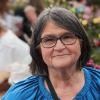
Marysia’s Story - A Life Lived Between Places
I was born in 1954, nine years after the war had ended, but in many ways, it never truly ended for my family. We lived in a bomb-damaged house in Croydon, where some rooms were habitable, while others were too dangerous to enter. If you stood in the middle of the ground floor and looked up, you’d see jagged edges of walls where floors should have been, the broken remains of a piano, a chair that once had a place around a table. Beyond that, just sky.
This was not unusual. Bomb sites surrounded us, playgrounds for children who knew to avoid the big metal things buried in the rubble. Poverty was a way of life; clothes repaired beyond their limits; meals stretched impossibly far. I grew up on stories of bombs falling over Warsaw, of my mother, grandmother, and great-grandmother sleeping in hedges, hiding in ditches, avoiding both the Nazis and the Russian troops. Family members were taken in the night, never seen again.
I learned young that being noticed could be dangerous. Safety lay in invisibility. You did not stand out. You did not make a fuss. And above all, you protected your family because everything else, homes, possessions, even countries - could be lost.
But education was something no one could take away. University was free then, so I grabbed my chance, leaving London for Cardiff. I loved Wales instantly, it was a fabulous city to be a student in. After university, life pulled me back to London, then unexpectedly to Germany for work. There, I reconnected with long-lost family, some I had never known existed. It was a bittersweet reminder of how history had scattered us.
Returning to London, I shifted my focus to furniture design, working to make spaces more accessible for people with disabilities. This led me to the London College of Furniture, where I met my future husband. He was Welsh. When we decided to start a family, he wanted to return home.
So, in 1991, we moved to Wales. I thought I knew the country, but village life was a shock. Everyone was connected, my husband had 27 first cousins, more family than I had ever met in my life. At first, I felt like an outsider again. But then, something unexpected happened. I became pregnant. More than any place, my daughter became my home.
Adjusting wasn’t easy. I missed the anonymity of London, but I found belonging through art, teaching for twenty years, stitching botanicals at the National Botanic Gardens, joining creative stitch groups. Through creativity, I connected with others in a way words had never allowed.
People ask if I miss London. I miss the buses that ran all night, the museums I could visit on a whim, the ability to disappear into the crowd. But home has never been a place for me. My parents were stateless, displaced persons. I remember my mother registering her location with the police every week, the documents marking us as people without a country.
My family spent generations being displaced, always searching for stability. I used to see that as a loss. Now, I see it as resilience. Migration is never easy, and the past never fully disappears. But in the end, we adapt, we create, and we find belonging in the places we least expect.

More items with these tags
This item also appears in

Contact Us
To request take down or report racist, offensive or otherwise harmful content.
You must be logged in to leave a comment