Howell Harris, Kidwelly Hostility, 1742 -1745
Description
Howell Harris, Methodist Revivalist
Kidwelly’s Hostility to the Methodist Revival
Howell Harris (1714–1773) stands as one of the driving forces behind the 18th-century Methodist revival in Wales—a movement that reshaped religious life across the country, including across Carmarthenshire and the Kidwelly district.
Born in Talgarth, Harris experienced a profound religious conversion in 1735 that redirected him away from a conventional clerical career within the Church of England and into a life of itinerant preaching. As a lay evangelist, he travelled relentlessly throughout Wales, carrying a message centred on repentance, spiritual renewal, and heartfelt personal faith.
The Kidwelly area formed part of this missionary landscape, though Harris’s relationship with the town itself appears to have been uneasy. Contemporary accounts and later traditions suggest he frequently encountered rough receptions in Kidwelly, where his emotionally charged and unconventional preaching often provoked opposition from sections of the clergy, local gentry, and hostile crowds. Across Wales, Harris regularly faced intimidation, disruption, and even mobs determined to silence him.
Between 1742 and 1745, Harris visited the Pugh family at Morfa Bach on numerous occasions as part of his preaching circuit through West Wales. These repeated visits indicate that Morfa Bach served as an important place of hospitality and support during the early years of the revival. Rather than making Kidwelly a central preaching base, Harris appears at times to have deliberately avoided the town itself, preferring more receptive households and communities nearby where the Methodist message found encouragement rather than confrontation.
These visits illustrate how the Welsh revival often spread—not first through churches or towns, but through domestic networks, sympathetic families, and informal gatherings. Homes such as Morfa Bach provided refuge, fellowship, and opportunities for preaching at a time when revivalists were frequently unwelcome elsewhere.
Despite opposition, Harris’s journeys helped establish Methodist “societies” across Carmarthenshire: disciplined groups meeting for prayer, scripture discussion, and mutual support. These societies became the foundation of a growing movement that would outlast its earliest preachers. Although Harris never settled in Kidwelly, his influence endured through these emerging fellowships in the surrounding district.
Working alongside figures such as Daniel Rowland and George Whitefield, Harris played a central role in what became known as the Welsh Methodist Revival. The movement strengthened Welsh-language worship, encouraged literacy and religious education, and reshaped community life throughout Carmarthenshire.
To admirers, Harris was more than a preacher. He was once described as “a burning and shining light, a barrier against profanity and immorality”—a figure remembered by some as “this meteoric preacher, this dauntless reformer, this Luther of Wales.” Such praise reflects both the intensity of his influence and the controversy he inspired.
In this wider story, the Kidwelly district represents not merely a place Harris passed through, but a landscape where revival advanced unevenly—meeting resistance in some quarters while taking root in others, including households like the Pughs of Morfa Bach, whose support helped sustain one of Wales’s most influential religious reformers.
Opposition to the Methodist Revival in Eighteenth-Century Wales
The Established Church, Local Clergy and Social Order
Peter Morgan Barnes raised a question on Facebook regarding who opposed Howell Harris, particularly focusing on the incumbent in Kidwelly at the time. This article explores why there was resistance to the Methodist revival in eighteenth-century Wales and considers the role of local clergy, including the Kidwelly incumbent, within that wider opposition.
The Methodist revival transformed religious life in Wales during the eighteenth century. Led by influential preachers such as Howell Harris and Daniel Rowland, the movement spread rapidly among ordinary people and encouraged a deeply personal and emotional approach to Christianity. Although the revival attracted thousands of followers, it also faced strong opposition from sections of the established church and the Welsh gentry. Their concerns centred on authority, social stability and changing religious practices.
Challenge to the Established Church
At the time, Wales fell under the authority of the Church of England, the official church of the country. Methodist preachers frequently held meetings outside traditional parish churches, often preaching in homes, fields and open-air gatherings. These practices allowed Methodism to reach communities who were distant from or dissatisfied with formal worship.
Many Anglican clergy regarded these activities as a challenge to parish authority. Parish priests had long been responsible for spiritual guidance and religious teaching within their communities. The increasing influence of Methodist preachers raised concerns that people would seek religious instruction outside established structures.
Although early Welsh Methodists generally remained within the Church of England rather than separating from it, their methods appeared disruptive to church leaders.
The Position of the Kidwelly Incumbent
One local figure connected to this period was William Jenkins, who served as the incumbent of Kidwelly during the lifetime and ministry of Howell Harris.
There does not appear to be any clear evidence showing that William Jenkins openly opposed the Methodist revival or Howell Harris personally. However, absence of evidence is not necessarily evidence of support. It would not be unreasonable to assume that Jenkins, like many clergy of the period, may have referred to Methodist preaching from the pulpit or discussed concerns about the movement while visiting parishioners during the week.
This possibility should be understood within the broader climate of the time. Many incumbents may have viewed Methodism cautiously, not because of hostility towards individual preachers, but because the movement challenged traditional patterns of worship, authority and parish influence.
Without documentary evidence, direct opposition by William Jenkins cannot be firmly established, yet his position as an Anglican incumbent placed him within a church increasingly uneasy about the revival.
Concerns About Religious Enthusiasm
Another reason for opposition was the emotional style of Methodist worship. Traditional Anglican services tended to be formal and structured. Methodist meetings, by contrast, encouraged passionate preaching, intense emotional responses and public expressions of repentance.
Reports of worshippers weeping, calling aloud or experiencing powerful religious conviction became associated with the revival. Critics often described such behaviour as excessive enthusiasm or fanaticism and regarded it as inconsistent with orderly worship.
Threat to Social Hierarchy
The Methodist revival attracted labourers, tenant farmers, craftsmen and poorer rural communities. Methodist societies also allowed lay members to lead meetings and take active roles in religious life.
For many members of the Welsh gentry, this shift was unsettling. Eighteenth-century society depended heavily upon established hierarchies. A movement that empowered ordinary people and encouraged independent religious expression appeared capable of weakening traditional authority.
Although Methodism was primarily a spiritual movement rather than a political one, some feared that challenges to religious authority could encourage broader questioning of social structures.
Changing Moral Expectations
Methodist teaching promoted strict moral discipline and condemned behaviours such as excessive drinking, gambling and neglect of the Sabbath. Followers were encouraged to pursue sober and disciplined lifestyles.
These teachings sometimes conflicted with established customs and local patterns of social life, contributing further to tensions between Methodists and sections of the local elite.
Fear of Large Gatherings and Disorder
Methodist preaching often attracted substantial crowds. During a period when Britain remained alert to unrest and instability, large outdoor religious meetings occasionally caused suspicion among landowners and authorities.
Although revival gatherings were generally peaceful, their popularity outside established institutions created concern.
Language and Welsh Identity
In many Welsh parishes, Anglican clergy were criticised for being absent or lacking fluency in Welsh. Methodist preachers often preached in the Welsh language and communicated directly with ordinary people.
This accessibility increased the movement’s popularity and highlighted dissatisfaction with parts of the established church. Methodism consequently became influential not only as a religious movement but also as a force connected with Welsh language and identity.
Conclusion
Opposition to the Methodist revival in eighteenth-century Wales involved more than theological disagreement. Resistance from the established church and sections of the gentry reflected wider concerns about authority, hierarchy and social change.
The case of William Jenkins of Kidwelly illustrates the difficulty of identifying personal opposition among parish clergy. While evidence of direct hostility is lacking, clergy occupied positions within institutions whose authority the Methodist revival increasingly challenged.
By appealing directly to ordinary Welsh people and promoting a more personal faith, the Methodist revival altered the religious and cultural landscape of Wales in ways that endured long after the eighteenth century.
Article created by Garry Smith,
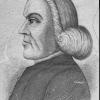
Image: Howell Harris (1714-1773), A photograph of a picture by John Thomas (1838–1905) circa 1875. National Library of Wales

More items with these tags
Related items


Contact Us
To request take down or report racist, offensive or otherwise harmful content.
You must be logged in to leave a comment