Limekiln, Plymouth Wood
Description
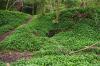
Near the entrance to the quarry lie the remains of what appears to be two limekilns. Limekilns were commonplace in the 19th century, and were found wherever limestone could be quarried. Limestone was baked in these kilns, creating lime that could then be spread on farmland that suffered from acid soils, making it better for growing crops, or used as mortar to help build many of the earliest houses in Ely.
This seems an unlikely place to have limekilns, as the nearby quarry is formed of sandstone. However, it could be that small beds of limestone, known as calcretes, were found in the quarry in large enough quantity to feed the kilns. On the other hand, the limestone could have been brought over from the nearby Coed Bychan Quarry.

This item also appears in

Contact Us
To request take down or report racist, offensive or otherwise harmful content.

You must be logged in to leave a comment