View of mediaeval tiles in Neath Abbey, c.1300s
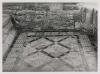
Description
Described by John Leland in the 16th century as 'the fairest in all Wales', Neath Abbey was built by Richard de Granville in 1130. Originally affiliated to the monastic order of Savigny, it was incorporated with all other Savigny houses into the Cistercian Order in 1147. The Abbey developed into a wealthy enterprise, owning land in Glamorgan, Devon and Somerset. However, it became embroiled in a bitter rivalry with Margam Abbey, and it suffered at the hands of the Welsh in the 13th century due to its Anglo-Norman sympathies.
It was at Neath Abbey that Edward II, pursued by his barons, was finally captured on 16 November 1326. He was later imprisoned in Kenilworth, and eventually murdered.
Following the dissolution of the Monasteries in 1539, the abbey building passed into the ownership of Sir John Herbert in the late 16th century, when it was converted into a country house. The large rectangular windows he installed are evident in the ruin as it stands today. By 1730, some of the buildings were being used for copper smelting. Excavation of the remains took place between 1924 and 1935.

More items with these tags
This item also appears in


Contact Us
To request take down or report racist, offensive or otherwise harmful content.
You must be logged in to leave a comment